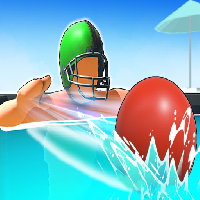
DODGE BALL












SIMILAR GAMES




























Description


Dodge Ball - UBG For School
About Dodge Ball - UBG For School
We believe that Dodge Ball serves as an ideal activity for school physical education programs because it combines fun, movement, and strategic thinking. The version offered by UBG For School is tailored to meet the developmental needs of students while emphasizing safety, inclusivity, and skill progression. Our platform provides detailed guides, training modules, and equipment recommendations that enable teachers to integrate the sport seamlessly into their curriculum.
History and Evolution
We trace the origins of dodge ball to ancient tribal games where participants threw small objects at opponents to test agility and reflexes. Over centuries, the game evolved through schoolyard adaptations and eventually became a structured sport with formalized rules. In recent decades, educational institutions have embraced dodge ball for its capacity to develop coordination, teamwork, and cardiovascular health.
Core Principles of Play
We enforce a set of core principles that guide every session:
- Safety First – All throws are directed at the torso and arms; headshots are prohibited.
- Fair Play – Players must respect opponents and adhere to the rulebook at all times.
- Inclusivity – Teams are mixed‑gender and skill levels are balanced to encourage participation.
- Sportsmanship – Victory is celebrated modestly, and defeat is met with graciousness.
Game Mechanics
We explain the mechanics in a clear, step‑by‑step manner:
- Each team lines up on opposite sides of the court.
- Players alternately throw soft, foam‑filled balls aiming for opponents.
- When hit, a player must sit out for a predetermined time or perform a penalty task.
- The game ends when all members of one team are eliminated or when a time limit is reached.
Benefits for Students
We highlight the academic and personal benefits that result from regular dodge ball participation:
- Improved cardiovascular endurance and muscular strength.
- Enhanced hand‑eye coordination and reaction time.
- Developed social skills such as communication, leadership, and cooperation.
- Increased confidence as students master throwing and dodging techniques.
Physical Conditioning
We recommend incorporating warm‑up routines that include dynamic stretches, light jogging, and mobility drills. Cool‑down periods featuring static stretches help reduce muscle soreness and promote recovery.
Mental Resilience
We observe that dodge ball cultivates quick decision‑making and situational awareness. Players learn to anticipate movements, adapt strategies on the fly, and manage competitive pressure.
Equipment Checklist
We provide a comprehensive list of required items to ensure a safe and organized session:
- Soft foam dodge balls – size 5 or 6, appropriate for school age groups.
- Protective eyewear – optional but recommended for younger participants.
- Cones or boundary markers – to define the playing area.
- First‑aid kit – for immediate treatment of minor injuries.
- Scoreboard or timer – to track game duration and team scores.
Ball Maintenance
We advise the following maintenance practices to prolong ball life:
- Inspect balls before each use for tears or deformities.
- Store balls in a cool, dry place away from direct sunlight.
- Clean surfaces with a mild detergent and dry thoroughly.
- Rotate ball usage among teams to ensure even wear.
Curriculum Integration
We assist educators in aligning dodge ball activities with national physical education standards. Lesson plans are structured around skill development, game strategy, and reflective discussion:
- Skill Stations – isolated drills focusing on throwing accuracy, footwork, and dodging.
- Mini‑Games – shortened versions of full‑court play to practice tactics.
- Reflection Sessions – group discussions on teamwork, fairness, and personal improvement.
Sample Lesson Flow
We outline a typical 60‑minute session:
- 5 minutes – Arrival and equipment check.
- 10 minutes – Warm‑up with dynamic stretches.
- 15 minutes – Skill stations rotating every 5 minutes.
- 20 minutes – Full‑court game with rotating teams.
- 5 minutes – Cool‑down stretches and breathing exercises.
- 5 minutes – Reflection and feedback.
Safety Protocols
We prioritize safety by implementing strict protocols:
- All throws must be underhand and directed away from the head.
- Players must maintain a safe distance when catching or retrieving balls.
- Coaches are required to supervise closely and intervene if rules are breached.
- Injury reports are logged and reviewed to improve future sessions.
First‑Aid Procedures
We provide step‑by‑step guidance for common scenarios:
Frequently Asked Questions
We address common inquiries from teachers, parents, and students:
- What age groups can participate? Our adapted rules suit children aged 6 to 18, with modifications for younger participants.
- How many players are needed? Teams of 5‑10 players work best, but flexible configurations allow for smaller groups.
- Can the sport be played indoors? Yes, a gymnasium with adequate space and safe flooring accommodates indoor play.
- Is equipment rental available? We offer rental packages through our platform; details can be accessed at https://ubgforschool.gitlab.io/.
Conclusion
We conclude that Dodge Ball - UBG For School delivers a comprehensive, safe, and engaging experience for school‑aged children. By integrating structured training, equipment guidance, and reflective practices, we empower educators to foster physical vitality and social growth among students. For further resources, lesson plans, and equipment orders, visit https://ubgforschool.gitlab.io/.
Play Dodge Ball for free on UBG For School, the platform with thousands of the best games. No Ads and easy to play from anywhere. Have fun with our unblocked games! Play with your keyboard or Click.