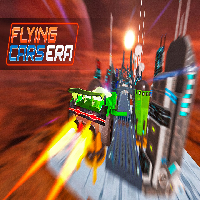
FLYING CARS ERA








SIMILAR GAMES













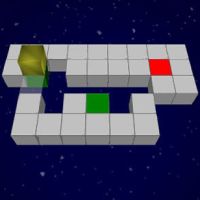














Description


Flying Cars Era - UBG For School
About Flying Cars Era - UBG For School
We present an in‑depth exploration of the emerging Flying Cars Era as it integrates with the educational platform UBG For School. This article details how advanced aerial transportation concepts align with curriculum development, student engagement, and project‑based learning initiatives. By examining interdisciplinary connections, we aim to equip educators and learners with the knowledge required to harness this transformative period.
Historical Context and Evolution
We trace the evolution of flying vehicle technology from early conceptual sketches to contemporary prototypes. The journey began with visionary designs in the early twentieth century and accelerated with advancements in materials science, propulsion systems, and autonomous navigation. Today, we observe a convergence of electric powertrains, artificial intelligence, and urban air mobility frameworks that collectively shape the Flying Cars Era. This historical perspective provides a foundation for understanding current innovations and future trajectories.
Core Technological Pillars
We identify three core technological pillars that define the modern Flying Cars Era:
- Electric Propulsion: High‑density battery packs and solid‑state technologies enable silent, zero‑emission flight.
- Autonomous Flight Systems: Machine‑learning algorithms and sensor fusion facilitate safe, driverless navigation.
- Urban Infrastructure Integration: Dedicated vertiports, air‑traffic management networks, and regulatory frameworks support scalable deployment.
Educational Implications
We analyze how the Flying Cars Era reshapes educational paradigms within the UBG For School ecosystem. The integration of aerospace engineering, coding, and design thinking creates interdisciplinary modules that inspire curiosity and critical thinking. Specific instructional strategies include:
- Project‑based learning units focused on designing lightweight airframes.
- Simulation labs that model flight dynamics using real‑time data.
- Collaborative workshops with industry partners to prototype urban air mobility solutions.
Curriculum Design Strategies
We recommend a structured curriculum that aligns with national standards while embracing the unique challenges of the Flying Cars Era. Key components include:
- STEM Integration: Fusion of science, technology, engineering, and mathematics through hands‑on experiments.
- Literacy Across Disciplines: Development of technical writing and storytelling skills to communicate complex concepts.
- Ethical and Societal Considerations: Discussion of privacy, safety, and environmental impact to foster responsible innovation.
Student Engagement Techniques
We employ several engagement techniques to sustain interest and deepen understanding:
- Gamified challenges that simulate aerial navigation scenarios.
- Virtual reality experiences that immerse learners in futuristic cityscapes.
- Mentorship programs pairing students with aerospace professionals.
Assessment and Evaluation
We propose a multi‑dimensional assessment framework that measures both technical competence and creative problem‑solving:
- Performance‑based projects evaluated by rubrics covering design, execution, and presentation.
- Reflective journals documenting personal learning journeys and insights.
- Peer‑review sessions that encourage collaborative critique and iterative improvement.
Community Partnerships
We emphasize the importance of establishing community partnerships to enrich the educational experience. Collaboration with local airports, aerospace firms, and research institutions provides students with real‑world context and networking opportunities. Joint ventures may include:
- Internship placements focused on urban air mobility projects.
- Guest lecture series featuring experts in aeronautics and autonomous systems.
- Community outreach events that showcase student‑crafted prototypes.
Future Outlook
We anticipate that the Flying Cars Era will continue to evolve, introducing new technologies such as swarm coordination, adaptive aerodynamic surfaces, and quantum communication networks for air traffic management. Educational institutions that proactively integrate these advancements will position graduates to lead the next wave of innovation. By maintaining a flexible and forward‑thinking approach, schools can ensure that learning remains relevant, engaging, and impactful.
We encourage educators, policymakers, and industry leaders to explore the resources available at https://ubgforschool.gitlab.io/ to further investigate the synergies between the Flying Cars Era and educational excellence.
Play Flying Cars Era for free on UBG For School, the platform with thousands of the best games. No Ads and easy to play from anywhere. Have fun with our unblocked games! Play with your keyboard or Click.