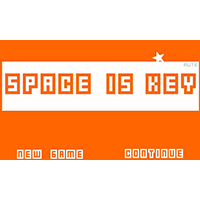
SPACE IS KEY






SIMILAR GAMES















Description


Space Is Key - UBG For School
About Space Is Key - UBG For School
We understand that mastering the fundamentals of geometry and spatial reasoning is essential for academic success in modern classrooms. Our curriculum is designed to integrate interactive activities that reinforce concepts such as area, volume, and coordinate systems, while also fostering critical thinking and collaborative problem‑solving skills. By emphasizing hands‑on exploration, we enable students to visualize abstract ideas and apply them to real‑world scenarios, ensuring a deeper comprehension that extends beyond rote memorization.
Core Principles of Our Approach
Our instructional model is built upon several guiding principles:
- Active Engagement: We create learning environments where students manipulate physical and digital models to explore spatial relationships.
- Iterative Feedback: Continuous assessment allows us to tailor instruction to each learner’s evolving needs.
- Interdisciplinary Integration: Concepts are linked to science, technology, engineering, and mathematics (STEM) projects, reinforcing relevance and application.
- Cognitive Scaffolding: We progressively increase complexity, supporting learners as they build confidence and competence.
Interactive Tools and Resources
We provide a suite of tools that empower both teachers and students:
- Virtual manipulatives that simulate three‑dimensional shapes and transformations.
- Dynamic worksheets that adapt to individual performance metrics.
- Collaborative whiteboards that encourage real‑time discussion and joint problem framing.
- Assessment dashboards that highlight strengths and growth opportunities.
All resources are accessible through our platform, ensuring seamless integration into daily lesson plans.
Implementation Strategies
To maximize impact, we recommend the following step‑by‑step implementation:
- Curriculum Alignment: Map each activity to existing standards and learning objectives.
- Pilot Testing: Conduct small‑scale trials to gather feedback and refine content.
- Professional Development: Offer workshops that equip educators with facilitation techniques.
- Scalable Rollout: Expand usage across grade levels, incorporating lesson‑level pacing guides.
By following this structured pathway, institutions can achieve consistent gains in spatial literacy and overall academic performance.
Measurable Outcomes
We track progress using a combination of qualitative and quantitative indicators:
- Improved scores on standardized geometry assessments.
- Higher engagement metrics during interactive sessions.
- Enhanced ability to articulate spatial reasoning processes in written reflections.
- Increased participation in collaborative problem‑solving activities.
These outcomes are documented through regular reporting, allowing stakeholders to observe tangible benefits over time.
Community and Support
We foster a vibrant community where educators share best practices, exchange success stories, and seek peer advice. Through our online forum, teachers can:
- Access a library of lesson templates.
- Participate in live webinars featuring expert instructors.
- Contribute user‑generated content, such as case studies and tip sheets.
- Collaborate on interdisciplinary projects that integrate spatial concepts with other subjects.
Our support team is available to answer questions, troubleshoot technical issues, and guide users toward optimal implementation.
Parent Involvement
We recognize the vital role that families play in reinforcing learning at home. Parents can support their children by:
- Encouraging the use of manipulatives during weekend projects.
- Reviewing concept‑based worksheets together.
- Discussing real‑world applications, such as architecture or navigation.
- Providing positive feedback that reinforces curiosity and persistence.
These strategies help extend the classroom experience and solidify understanding.
Future Directions
Looking ahead, we are committed to expanding our offerings with advanced technologies that further enrich spatial learning. Plans include:
- Integrating augmented reality experiences to visualize complex structures.
- Developing adaptive learning pathways that respond to individual cognitive patterns.
- Collaborating with research institutions to refine pedagogical approaches based on emerging evidence.
Our vision is to create an ecosystem where spatial intelligence is recognized as a cornerstone of comprehensive education, preparing students for the challenges of tomorrow’s innovative workforce.
Join Us on This Journey
We invite schools, educators, and community partners to explore the possibilities that arise when space becomes a central focus of learning. Together, we can cultivate a generation of thinkers who navigate the world with confidence, creativity, and a deep appreciation for the interconnections of geometry, design, and problem‑solving.
Discover more about our initiatives and resources at https://ubgforschool.gitlab.io/.
Play Space Is Key for free on UBG For School, the platform with thousands of the best games. No Ads and easy to play from anywhere. Have fun with our unblocked games! Play with your keyboard or Click.